
One-handed pianist Lee Hoon to hold recital
Pianist Lee Hoon, who lost the use of his right side to a stroke in 2012, will give a solo recital at Youngsan Art Hall on Nov. 28. In this column, Hulk Foundation chairman Lee Man-soo looks at Lee's recovery and the mentor and family who stood behind him.
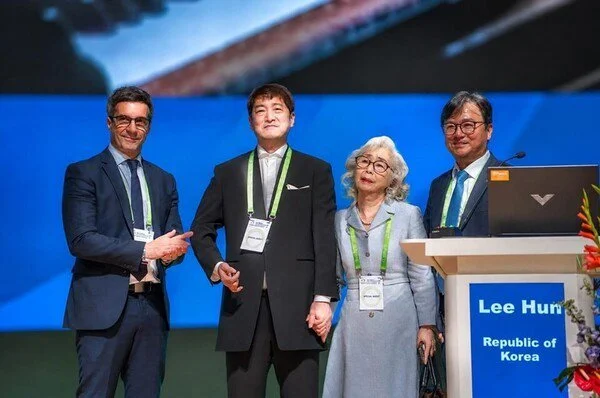
Pianist Lee Hoon, who was left with right-side paralysis by a stroke in 2012, will give a solo recital at Youngsan Art Hall in Seoul on Nov. 28. After losing the use of his right hand and his language abilities, he went on to earn a doctorate in music in 2017 by performing with his left hand alone.
Last November, I reunited with Lee Hae-chang, a legend from the early days of Korean professional baseball, for the first time in 30 years, and that renewed bond led to something unexpectedly moving. I recently heard through an acquaintance that his eldest son, Lee Hoon, will give a solo recital at Youngsan Art Hall on Nov. 28.
A reunion after 30 years, and a young man's struggle I learned of too late
Having lived apart for so many years, I had never heard his story. Once I looked it up, I spent the whole day in front of the screen, moving between tears and shivers. In 2012, a stroke struck like a bolt from the blue a promising pianist who had studied in Germany and the Netherlands and was pursuing a doctorate at the University of Cincinnati in the United States.
Damage to the left side of his brain paralyzed his right arm and leg and took away his ability to speak. For a pianist, losing the right hand was tantamount to a death sentence.
Yet at the end of despair, a miracle began. A single remark from his childhood teacher, Professor Jeon Young-hye, that "there are more than 1,000 pieces written for the left hand" brought him back to the keyboard. He completed seven solo recitals with his left hand alone and finally earned his doctorate in music in 2017.
This past October, at the opening plenary session of the 18th World Stroke Congress (WSC 2026) in Seoul, he gave a talk on "The Power of Recovery" and drew a standing ovation from medical professionals from around the world.
Miracles are not achieved alone: a mentor's insight and a family's solidarity
Lee Hoon's story should not be consumed simply as a tale of "superhuman individual willpower." Between its lines stand two pillars our society has lost: "true mentoring" and "family solidarity."
The first is the role of the mentor. What a student in despair needs is not cheap sympathy but the clear-eyed insight to open a door to new possibilities. Professor Jeon's words, "You can play with your left hand, too," are the mark of a great teacher pointing a student slumped before a closed door toward another way out.
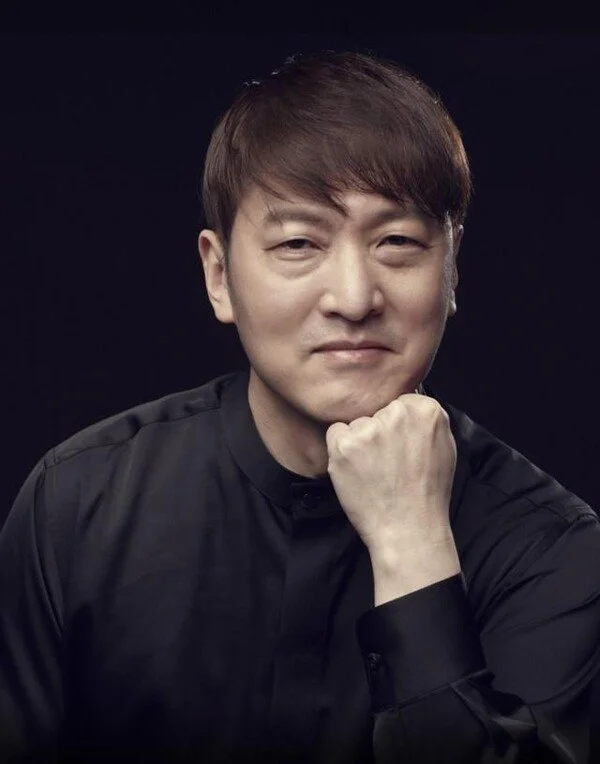
The second is the love of a family that held him up in silence. When a son whose genius was in full bloom collapsed overnight, the pain Lee Hae-chang and his wife must have endured is hard even to imagine. Yet because his mother's devotion and his family's faith kept them at his side to the end of the darkest tunnel and lifted him back up, Lee Hoon's left hand could strike the keys again. A great comeback is never achieved through one person's lonely struggle alone.
"I am still practicing and dreaming": a wake-up call to an impatient, faint-hearted age
The last words Lee Hoon left on the World Stroke Congress stage struck my heart like a heavy blow.
"I am still practicing. I am still dreaming."
He already holds a doctorate, has published two books and has a film about his life awaiting release, yet he still speaks of "practicing" and "dreaming."
That one line sharply reflects the distorted self-portrait of our society today. When conditions are even slightly unfavorable, or our starting line is even a little behind others', we readily blame our circumstances and give up. A lethargy that refuses even to begin unless everything is perfectly in place has spread throughout society.
I, too, who have spent my life on the field shouting "Never Ever Give Up" to countless players, felt ashamed. I taught that philosophy with words, but Lee Hoon broke through the paralysis of his body and proved its truth with his life.
Paying tribute to a one-handed melody greater than two hands
For him, the piano was never just an instrument. It was the lifeline that pulled him back from the threshold of death and the instrument of a calling that turns despair into hope. The world has many performers who show off flawless technique with two hands, but few who lift a broken soul with one.
What truly matters is not how perfect our conditions are. It is whether, at the moment we feel we have lost everything, we have the courage to press the keys again with the one hand that remains.
Today, before Lee Hoon's left hand, I firmly set down the laziness within me that made excuses: that I am too old, that my body is not what it used to be, that my surroundings are barren. Miracles are not gifts reserved for special people. For those who do not give up and open the practice-room door once more, miracles at last become part of daily life.
I send my deep respect and applause to Lee Hoon for his noble challenge and to Lee Hae-chang's family for their beautiful solidarity.
*A note from Naewoe Economy TV: This column was written by an outside contributor and then corrected, proofread and polished using AI. AI-generated images included in the article are identified in their photo captions.
Comments 0