
FSS union slams reform plan as one-sided
The Financial Services Commission and the Financial Supervisory Service unveiled a reform plan centered on voluntary correction on Nov. 27, but the FSS labor union immediately criticized it as a lopsided measure that only limits the FSS's authority.
The Financial Supervisory Service (FSS) labor union on Nov. 27 criticized a financial administration reform plan unveiled that day at the Government Complex Seoul, saying it leaves out any changes to the Financial Services Commission (FSC). The union also pointed out that the FSC's director general did not attend a single one of the 72 Sanctions Review Committee meetings held since 2024.
The FSC and the FSS have introduced a reform of inspections and sanctions centered on voluntary correction, but internal backlash erupted immediately, with critics calling it a lopsided prescription that only limits the FSS's authority.
'Voluntary correction' over after-the-fact punishment... follow-up to deferred public institution designation
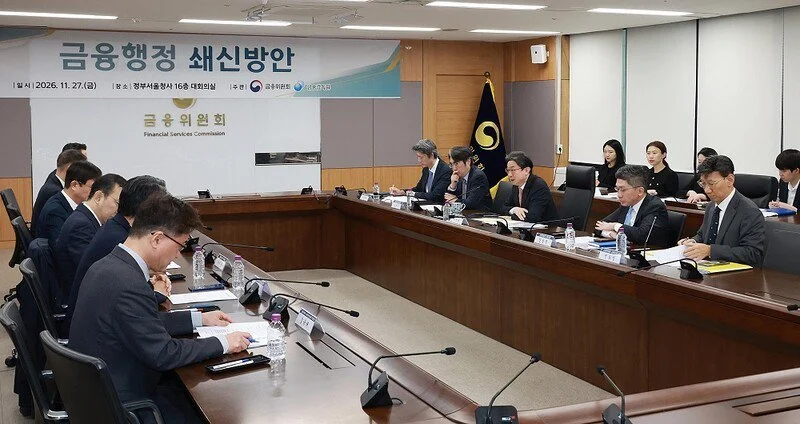
On Nov. 27, the FSC and the FSS announced the Financial Administration Reform Plan at the Government Complex Seoul, centered on improving regular inspections of financial companies and expanding sanction reductions and exemptions. The plan aims to move away from practices focused on after-the-fact detection and disciplinary action toward prevention and voluntary correction.
The plan follows the Public Institutions Management Committee's decision in January to defer designating the FSS as a public institution, a decision that came with demands to improve the public accountability and transparency of its overall operations. Regular inspections will concentrate resources on core and vulnerable areas, and minor violations will be exempted from sanctions in favor of alternative measures.
When a financial company's voluntary correction efforts are recognized, the range of sanction reductions and exemptions will be widened. Regulators also plan to make active use of liability exemptions for lending operations and effective corrective orders.
FSS union: "A half-measure that leaves out the FSC... zero director general attendance in 72 sanctions meetings"
Immediately after the announcement, however, the FSS labor union issued a statement voicing strong opposition. The union pointed out that while the plan claims to make financial supervision more public and transparent, it leaves out the composition and operation of the FSC, the top decision-making body for financial administration.
"Although the FSC is a collegiate administrative body, its membership makes it run effectively like a single-head agency," the union said in the statement. It added that it regards the reform plan as "a half-measure" lacking any reflection on the factors that have undermined the public nature and transparency of supervision.
The plan to "strengthen prior consultation procedures" for major sanction cases also came under fire. The union argued that tightening procedures alone has limits, since informal prior consultations already take place and even the existing official procedures are non-binding and therefore ineffective.
"The director general in charge at the FSC Secretariat is an ex officio member of the FSS Sanctions Review Committee, yet he did not attend a single one of the 72 committee meetings held since 2024, and the responsible division director attended on his behalf only twice," the union said.
"Hong Kong ELS fine gap stems from the standards"... union calls for committee overhaul and inspector immunity
The union also pushed back on criticism over the large gap between the fine the FSS initially notified and the amount the FSC finally imposed for mis-selling of equity-linked securities (ELS) tied to the Hong Kong H-index. It said the problem was not a lack of prior consultation but the authority and standards for reducing fines. Under the current calculation standards, the FSS has neither the authority to reduce fines based on unjust gains nor standards for discretionary reductions, according to the union.
To address this, the union proposed that, in principle, no more than two FSC commissioners come from the FSC's civil service and that the FSS governor be given the right to recommend standing commissioners. It also called for giving the FSS the right to recommend discretionary reductions, clearly limiting the cases subject to prior consultation, and having the FSC Secretariat attend Sanctions Review Committee meetings in person to present its official opinion. In addition, it demanded that immunity for inspectors be written into the rules to ease concerns over damage lawsuits.
"With damage lawsuits now being filed even against individual inspectors, unless inspector immunity is clearly defined, inspectors will have no choice but to conduct defensive, rigid, detection-oriented inspections to avoid being held accountable later," the union stressed.

Comments 0